Crisis Leadership for Command, Control, and Continuity
Prepare. Respond. Lead – When It Matters Most.
In today’s volatile, always-on environment, crises are no longer rare or contained. From cyber breaches and reputational attacks to workplace misconduct, political backlash, and digital misinformation, leaders across industries must be ready to act, and communicate, under pressure. This program is built for the reality of modern crises: digital-first, data-informed, and accelerated by AI.
Program Overview
The Crisis Leadership for Command, Control, and Continuity Course at Emerson College equips senior leaders with the strategic frameworks, digital fluency, and practical experience needed to prevent crises, manage them effectively when they occur, and build organizational cultures that reduce risk over the long term.
Designed for experienced professionals, this program blends academic rigor with real-world practice, led by world-class faculty who have navigated crises at the highest levels of government, media, transportation, and global enterprise.
What to Expect from the Program
World-renowned faculty
Only 4-year college exclusively dedicated to communication and the arts
Ranked No. #2 in Most Innovative Schools by U.S. News & World Report
This immersive executive education program offers a digital-first, practitioner-led approach to crisis communication, reflecting how crises actually unfold today: in real time, across platforms, under intense scrutiny.
Participants Engage in:
Who Should Enroll?
This program is designed for senior-level professionals responsible for leading organizations through high-stakes moments. Ideal participants include executives, vice presidents, senior directors, and communication leaders across industries, particularly those operating in high-visibility, high-risk environments such as media and entertainment.
Whether you are shaping enterprise strategy, managing corporate reputation, or serving as a public-facing leader, this program equips you with the skills to anticipate crises, respond decisively, and protect organizational trust.
World-Class Faculty with Direct Crisis Experience

Owen Eagan
Senior Lecturer
Owen Eagan is a Senior Lecturer in the Department of Communication Studies and is a management consultant with Consensus Strategies. He has been teaching at Emerson College for 15 years and has more than 30 years of experience in business and political consulting. He primarily teaches classes related to business and politics including Management & Communication, Leading Effective Teams, Campaign Management and Crisis Communication.
His research specializes in measuring and assessing strategic communications in business and political environments. This includes utilizing traditional and evolving theoretical and analytical approaches to gauge the efficacy of various forms of communication from interpersonal to mass media communication.
His commentary and research have appeared in leading industry and academic publications including Campaigns & Elections, Variety, CNN, the Journal of Media Psychology and the Howard Journal of Communications. His most recent book published by Palgrave Macmillan, Oscar Buzz and the Influence of Word of Mouth on Movie Success, is the result of several years of research that he conducted at Emerson College. As a recognized expert in the industry, he has also served for several years as a judge for the American Association of Political Consultants’ prestigious Pollie Awards, which honor excellence in the practice of political communication.
In addition to serving as a faculty member at Emerson, Owen is a Senior Vice President for Consensus Strategies, a management consulting firm that specializes in strategic advocacy for major corporate and institutional clients. He has worked on more than a hundred political campaigns, including the successful ballot initiatives for the $5 billion rail transit proposal in Honolulu, Hawaii, and the $2.6 billion Wynn Resorts proposal in Everett, Massachusetts, which received record support of 86.5%.
He received a B.A. from Clark University, an M.A. from Emerson College and an M.B.A. from Pepperdine University. He also attended the MIT-Harvard Public Disputes Program and the University of California-Berkeley CEQA CLE program, and is certified in Social & Behavioral Research by the Collaborative Institutional Training Initiative.
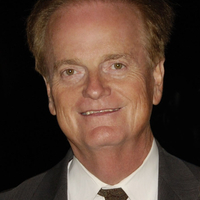
J. Gregory Payne, PhD
Associate Professor & Chair
Dr. J. Gregory Payne is Chair of Emerson College’s Department of Communication Studies, the first communication department in the United States. He is the Co-Director of the Emerson Blanquerna Center for Global Communication and received an “Honoris Causa” from the Blanquerna School of Communication and Public Relations, University of Ramon Llull in Barcelona in the fall of 2019 for his lifelong distinguished academic and professional career.
In addition, Payne has taught at Yale and Tufts University as well as Occidental College. Dr. Payne received his B.A, M.A. and Ph.D. at University of Illinois at Urbana-Champaign where he was Phi Beta Kappa and a Big Ten Traveling Scholar where he studied at the University of Wisconsin-Madison and in a special scholar program at the University of Southern California. He earned an MPA from the Kennedy School of Government at Harvard University. He is the co-author of Tom Bradley: The Impossible Dream, Mayday: Kent State, the play Kent State: A Requiem, and has authored academic and popular articles and book chapters for publications worldwide.
He has lectured internationally on topics related to political communication, public diplomacy, health communication, media, ethics, leadership, negotiation, crisis and risk communication, and political and social movements. He is on the Advisory board of the Journal of Health Communication, Tripodos, American Behavioral Scientist, Media Ethics and the Journal of Promotion Management among others. Dr. Payne has served as Editor for American Behavioral Scientist’s special edition on the U.S. presidential campaign for every election since l988.
He has consulted with the U.S. State Department, the U.S. Department of Defense and U.S. Department of Treasury, City of Boston, City of Los Angeles, National Republican Institute, National Institute of Health, Atomic Energy Commission and U.S. Centers for Disease Control & Prevention (CDC), Bechtel, Fidelity Investments, Watson Pharmaceuticals, U.S. Department of Veterans Affairs, Formula One, among others. He is a frequent source for print and electronic media outlets including USA Today, The New York Times, The Washington Post, The Boston Globe, Los Angeles Times, Chicago Tribune, Newsday, CNN, Fox News, Sky News, MSNBC, Arab News, BBC, ABC, CBS and NBC (television and radio).

Kevin Mercuri
Executive-in-Residence
Kevin Mercuri has a distinguished three-decade career in public relations, public affairs, and lobbying. He serves as an Executive-in-Residence at Emerson College where he teaches classes in crisis communication, international public relations, sports public relations and more. He is also the founder and CEO of Propheta Communications.
Kevin Mercuri is the CEO and founder of Propheta Communications, a full-service public relations agency based in New York. He holds more than thirty years of experience in public relations and related disciplines. His career ranges from boardrooms to basement start-ups to the Nation’s Capital.
Prior to founding Propheta Communications, Kevin served as senior vice president for 5W Public Relations, where he played a key role in the agency’s ascension from a bootstrap start-up to an Inc. 500 company. His additional leadership experience includes Edelman’s PR21 and other noteworthy agencies.
Prior to working in New York, Kevin led public affairs campaigns in Washington, DC, for the Internet Alliance, the Interactive Gaming Council, AIDS Action Council, and other special interest groups. He holds a Bachelor’s and Master’s Degree in Communications from Emerson College.
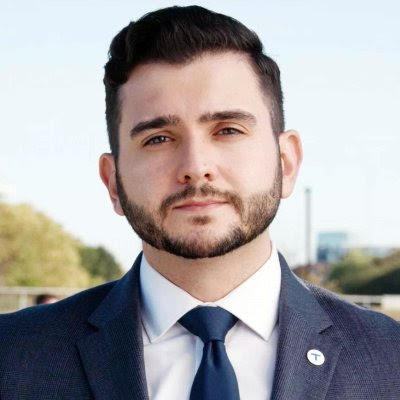
Andrew Cassidy
Senior Director of Digital Strategy & Engagement, MBTA
With over 17 years of experience in digital marketing, communications, and crisis management, Andrew Cassidy has helped organizations navigate high-stakes moments, build trust during uncertainty, and empower teams to overcome adversity. He currently serves as the Senior Director of Digital Strategy and Engagement at the Massachusetts Bay Transportation Authority (MBTA), where he leads the agency’s digital presence, oversees crisis communication efforts, and hosts the podcast Spilling the T.
Prior to joining the MBTA, Andrew worked in higher education as Director of Outreach for Emerson College’s School of Communication and as Director of Social Media at Miami Dade College, the largest and most diverse higher education institution in the U.S. Across all these roles, he has championed the power of communication to create clarity, confidence, and connection – especially in crisis.
In addition to his public service and education work, Andrew is the founder and president of Cassidy Consulting, a Boston-based marketing and PR firm that helps organizations tell their stories, build resilience, and engage meaningfully with their audiences. His insights have been featured in BBC World News, USA Today, and The Boston Globe, reflecting his deep understanding of strategic messaging in today’s complex media landscape. Andrew is passionate about equipping leaders with the tools to inspire trust, navigate uncertainty, and communicate with purpose.
Andrew received his B.S. in Communication Studies and M.A. in Strategic Public Relations from Emerson College.
Program Curriculum
At the core is a high-level executive course that moves leaders through the full lifecycle of a crisis: pre-crisis prevention, crisis response, and post-crisis recovery and learning. In a condensed format, senior executives gain a clear, strategic understanding of how crises emerge, how to respond effectively under pressure, and how culture and leadership decisions shape outcomes long before and long after a crisis occurs.
For professionals who need deeper expertise, the program expands into three focused, in-depth courses, each dedicated to a critical stage of crisis communication.
Together, the curriculum mirrors an MBA-style model: the executive course provides strategic fluency, while the advanced courses deliver practical mastery. All courses emphasize real-world application through case studies, simulations, experiential learning, and executive presentations, ensuring participants leave with tools they can immediately apply inside their organizations.
Preventing crises through vulnerability analysis, risk assessment, and early detection
Managing and communicating during a crisis, including stakeholder messaging, media training, and social media response
Building a culture of prevention, using leadership, internal communication, and change management to reduce future risk
Upcoming Course Dates
|
Session
|
Course Dates
|
|---|---|
|
1 |
Thu, May 21; Fri, May 22; and Sat, May 23 |
|
2 |
Fri, Jun 5; Fri, Jun 12; and Fri, Jun 26 |